How to Level a Backyard Before Sod or Landscaping
A flat-looking yard is not always a properly graded yard. Before bringing in sod, gravel, topsoil or new landscaping, the goal is to create a smooth surface while still moving water away from the house.
To level a backyard correctly, first decide where rainwater needs to drain, then cut down high spots and fill low spots while maintaining a gentle slope away from structures. For residential yards with reasonable access, a mini skid steer can make moving and spreading soil, gravel and topsoil much faster than doing the entire job by hand.
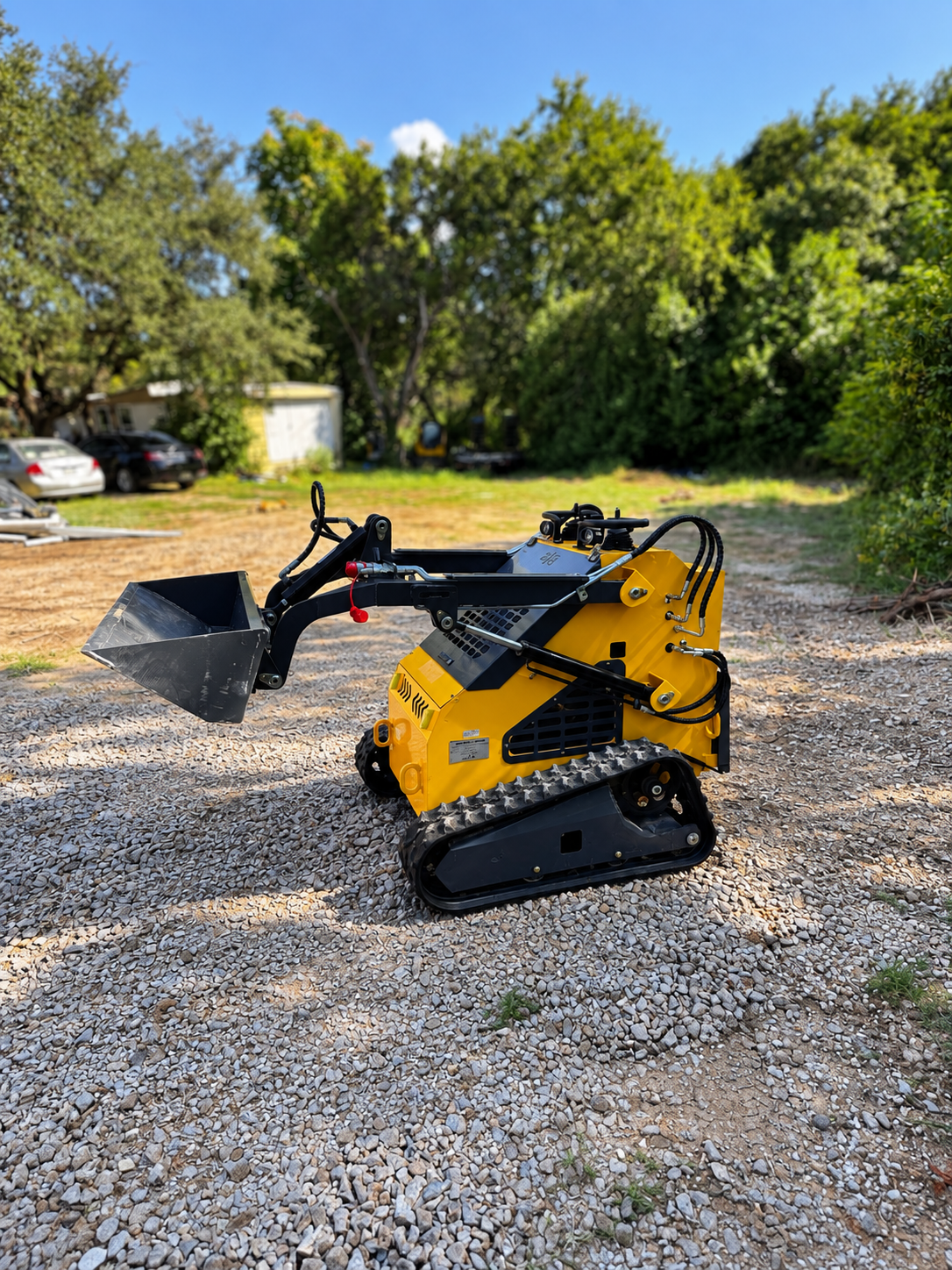
For most residential backyard grading and landscaping, start with a mini skid steer. For larger open properties or much heavier material movement, consider the CAT 259D compact track loader or ask about operator service.
Start With Drainage, Not Appearance
The biggest mistake when leveling a yard is making everything perfectly flat without thinking about where rainwater will go. In Leander and the surrounding Hill Country, a yard can have compacted soil, shallow rock, low spots and sudden grade changes. Before moving dirt, identify the house, patio, fence lines, drains and the lowest safe place for runoff to travel.
You usually want a gradual, controlled slope away from structures rather than a tabletop-flat yard. Low areas that hold water should be corrected, but filling them blindly can simply move the problem somewhere else.
When a Mini Skid Steer Helps
For backyard work, a compact mini skid steer can be much faster than wheelbarrows and hand rakes. It can move topsoil, gravel, mulch and fill, scrape small high spots and help spread material across a yard. The biggest advantage is access: a smaller machine can fit residential spaces where a full-size skid steer may be too wide or heavy.
Our ZJ-380 mini skid steer is aimed at this type of landscaping and property work. If the project is larger, rougher or involves significant material movement, a full-size CAT 259D may make more sense.
A Simple Backyard Leveling Process
- Mark utilities, irrigation, drains and anything that cannot be disturbed.
- Decide where runoff should travel before changing the grade.
- Remove loose debris and vegetation that will prevent a consistent grade.
- Cut down obvious high areas and use that material where appropriate.
- Bring in additional soil only after you know how much is actually needed.
- Spread in manageable layers rather than dumping one large pile and chasing it around the yard.
- Finish with hand tools where the machine cannot safely reach.
Planning to dig? Call 811 before disturbing the ground and identify private lines such as irrigation, low-voltage wiring and private utility runs that may not be marked by the public locate service.
DIY Rental or Operator Service?
If you are comfortable running compact equipment and have a straightforward yard, renting the mini skid can be a practical DIY option. If the yard has steep grade changes, limited access, retaining walls, drainage problems or a large amount of material to move, hiring an operator can be faster and can reduce the chance of having to redo the grade.
Noble Construction serves Leander and nearby areas including Jonestown, Lago Vista, Liberty Hill, Cedar Park and surrounding Central Texas communities. Equipment delivery and operator availability depend on the job and location.
Frequently Asked Questions
Can I level my backyard with a mini skid steer?
Yes. A mini skid steer can move and spread soil, scrape small high spots and carry gravel or topsoil. Final shaping around structures, fences and tight edges may still require hand tools.
Should a backyard be perfectly flat?
Usually no. A yard should generally keep enough slope to move water away from the house and toward a safe drainage path. Making the entire yard perfectly flat can create standing-water problems.
When should I use a full-size skid steer instead?
A full-size tracked skid steer makes more sense when the property is open, the project involves substantially more material, or heavier grading and cleanup are required.