What Is the Best Way to Move Gravel Around a Backyard?
A gravel project becomes much easier when the delivery pile, access route and final placement are planned as one system. The right compact loader can replace dozens of slow wheelbarrow trips, but only if it can safely reach the work area.
For more than a small quantity of backyard gravel, use a compact tracked loader with a bucket when access allows. Stage the delivery pile where the machine can approach it, measure every gate and tight turn, protect vulnerable surfaces, and move the gravel in controlled loads. Wheelbarrows still make sense for very small jobs or areas the machine cannot reach.
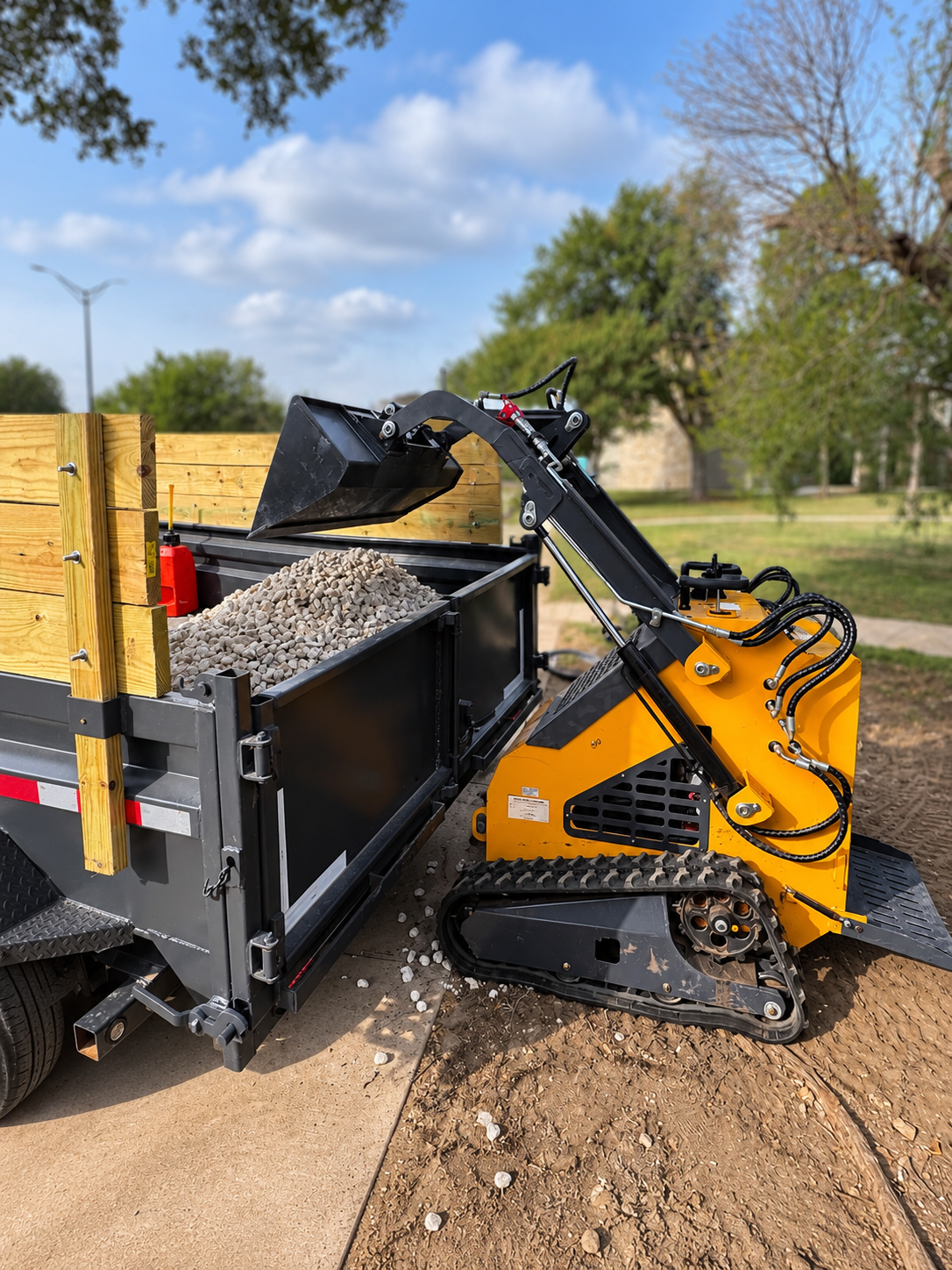
The ZJ-380 mini skid steer is the first machine to consider for backyard gravel movement. It is a compact tracked loader with a general-purpose bucket included, and the current rental page lists its overall width at approximately 41–43 inches, with a bucket approximately 44–45 inches wide. Those are planning dimensions, not a substitute for measuring your actual gate, route and turning space.
Start With the Route, Not the Gravel Pile
The most common planning mistake is deciding where the gravel truck should dump before deciding how the material will travel from that pile to the backyard. A convenient spot for the delivery driver can be a poor spot for the loader. A pile tucked against a fence, placed behind a parked vehicle or dropped where the machine cannot approach squarely creates unnecessary handling.
Walk the entire route before ordering material. Begin at the proposed delivery point and continue all the way to the farthest placement area. Measure the narrowest opening, not only the advertised gate size. Gate hinges, latches, posts, air-conditioning equipment, utility meters, retaining walls and sharp corners can reduce usable space. Also look up: branches, roof overhangs and wires can matter even when the machine fits at ground level.
In Jonestown, lots and access routes vary widely, so the practical question is not whether a compact machine fits through “most” yards. It is whether it fits through this yard without forcing a turn that the machine and bucket cannot make. A straight 48-inch opening can be more usable than a wider opening followed immediately by a tight ninety-degree turn.
How Much Gravel Are You Actually Moving?
Estimate the project before choosing a method. For a rectangular area, calculate cubic feet by multiplying length by width by planned depth, with all measurements in feet. Divide the result by 27 to convert cubic feet to cubic yards. Irregular beds can be divided into smaller rectangles and added together. Material suppliers may recommend adjusting the order for compaction, settlement, waste or the specific aggregate, so use the calculation as a planning estimate and confirm the order with the supplier.
The quantity affects the equipment decision. A few bags or a thin layer in one small bed may not justify bringing in a machine. A bulk delivery that must cross the property is different. Every wheelbarrow load requires filling, pushing, dumping and returning to the pile. Soft ground, slopes and narrow paths make each cycle harder. A loader is valuable because it combines scooping, carrying and rough placement, not because it eliminates all hand work.
Plan a Clean, Repeatable Material Path
Choose the staging point
The delivery pile should be on a stable area where the loader can approach, fill the bucket and turn away without entering traffic or damaging the surrounding property. Confirm that the delivery is allowed in the chosen location and that it will not block a sidewalk, driveway access, drainage path or neighboring property. If the gravel must be placed on a driveway, consider how the surface will be protected and cleaned afterward.
Prepare the travel lane
Remove hoses, toys, landscape lighting, low branches and movable obstacles. Mark sprinkler heads and other private features that may not be obvious from the operator position. If the route crosses pavers, thin concrete, septic components, soft turf or other vulnerable areas, do not assume they can support the machine and loaded bucket. Choose a different route, use appropriate protection designed for the conditions or switch to smaller-scale handling.
Separate people from the machine
Children, pets and bystanders should stay out of the travel and loading area. Establish where helpers will stand before work begins, especially if someone is guiding placement. A person should never ride in the bucket or walk beneath raised loader arms. The operator needs a clear travel path and a consistent signal to stop if visibility is lost.
A Practical Gravel-Moving Workflow
- Mark the finished boundaries and target depth. Use stakes, string or paint appropriate for the project so the operator knows where material belongs.
- Prepare the base first. Gravel should not be used to hide an unresolved drainage problem, unstable soil or unprepared subgrade. Complete excavation, edging, fabric or base work required by the project design before bulk placement.
- Start at the farthest point. Work back toward the access point so the machine does not repeatedly drive over finished areas.
- Carry controlled loads. Keep the bucket low while traveling and avoid overfilling it. Smaller predictable loads are easier to place and reduce spillage along the route.
- Dump in short, planned sections. Place several small piles or thin rows rather than one large mound that must be moved again by hand.
- Rough-spread with the bucket. Use gradual passes. Do not treat the bucket edge as a precision grading instrument near irrigation, edging, walls or shallow utilities.
- Finish by hand. Rakes, shovels and screed boards are still useful for corners, edges and consistent final depth.
- Compact only as the project requires. Decorative rock, drainage aggregate, road base and pathway materials do not all use the same installation method. Follow the material supplier or project specification rather than assuming every gravel layer should be handled identically.
Mini Skid Steer, Full-Size Loader or Wheelbarrow?
Choose a mini skid steer when access is the limiting factor
A mini skid steer is usually the best balance for a residential backyard when the route is narrow but machine-accessible. Noble Construction’s ZJ-380 uses rubber tracks and is currently offered with its bucket only. The bucket is suited to loose material such as gravel, soil and mulch. Delivery is available based on location, and customer pickup requires a suitable trailer, tow vehicle and securement setup.
The machine’s compact footprint does not make every yard suitable. Measure the route and inspect slopes, drop-offs, soft areas and overhead obstacles. The current rental page notes published width variations among ZJ-380 builds, so confirm the rental-unit fit instead of relying on a generic online specification.
Choose a full-size compact track loader for scale and open access
If the property has wide access, a stable work area and a much larger volume of material, a CAT 259D compact track loader may be the more efficient class of machine. Bigger is not automatically better in a backyard. The larger machine needs more maneuvering room and places different demands on the route and work area. Choose it because the project scale and site support it, not simply because it can carry more per cycle.
Choose wheelbarrows for genuinely small or unreachable areas
Wheelbarrows remain practical when the quantity is small, the route includes stairs, the machine cannot turn, or the surface should not carry powered equipment. They are also useful for the last few feet around plants, utilities and finished hardscape. A hybrid plan often works well: use the loader for the long haul and wheelbarrows or buckets for the final restricted area.
What the ZJ-380 Rental Includes
The current Noble Construction rental listing describes the ZJ-380 as a 15-horsepower gasoline, rubber-tracked mini skid steer weighing approximately 1,600 pounds. The general-purpose bucket is included; additional attachments are not currently offered for this machine. The listed rental options are $125 for four consecutive hours or $175 for eight hours. Availability and final details are confirmed after a rental request is submitted.
Those facts matter to project planning. Have the material staged, the route cleared and helpers organized before rental time begins. If delivery is requested, provide accurate access information and photographs when useful. If you plan to pick it up, confirm the transport and securement requirements before assuming your trailer and tow vehicle are appropriate.
DIY Rental or Experienced Operator?
A do-it-yourself rental can be reasonable when the site is open, mostly level, clearly marked and the renter is familiar with compact equipment. The operator should understand the controls and safety systems before beginning productive work. Practice with an empty bucket in a clear area, then start with light loads. Stop if the route, ground conditions or machine behavior do not match the plan.
Use an experienced equipment operator or contractor when the work is close to structures, retaining walls, utilities, drop-offs or expensive finished surfaces; when the route is steep or unstable; or when precise grading is part of the job. If you are unsure which approach fits, describe the project and access conditions when contacting Noble Construction. The goal is to choose a realistic plan, not force a rental into a site that is poorly suited for it.
Safety Points That Matter on a Residential Site
Read and follow the rental unit’s operating instructions and keep its safety systems working as designed. OSHA’s skid-steer safety bulletin emphasizes operator training, keeping bystanders away, using the operator restraint system, never bypassing interlocks and lowering the bucket or attachment to the ground before leaving the operating position. Although the bulletin is written for workplace safety, those equipment hazards do not disappear in a backyard.
Travel with the bucket low, slow down before turns, and avoid abrupt movements. Do not use the bucket to carry a person. Never work beneath raised arms without the manufacturer-approved support procedure. Inspect the route repeatedly as gravel spills, rain or repeated travel can change traction and surface conditions during the day.
Moving gravel alone normally does not require excavation, but many gravel projects include edging, drainage work or base removal. If the scope changes to ground disturbance, request utility locating before digging and identify private lines and systems that a public locate may not cover.
Common Mistakes That Waste Time
- Ordering first and measuring later. The pile arrives, but the selected machine cannot pass the narrowest gate or corner.
- Putting the pile in the machine’s blind spot. Poor staging forces awkward approaches or repeated cleanup.
- Driving over the finished area. Starting at the entrance traps the operator behind completed work.
- Trying to finish entirely with the bucket. Bulk placement is fast; detailed edges still need hand tools.
- Ignoring drainage. Gravel does not automatically fix standing water, improper slope or runoff from another source.
- Using one method for every aggregate. Decorative stone, drainage rock and compactable base have different purposes and finish requirements.
- Leaving site preparation for rental day. Clearing the route while the rental clock is running reduces useful machine time.
Planning a Jonestown Gravel Project
For a backyard in Jonestown, begin with photos and measurements: the delivery location, narrowest gate, tightest turn, steepest section and final placement area. Note anything fragile or hidden along the route. Then match the material quantity and access to the machine rather than choosing equipment from the project name alone.
Noble Construction serves Jonestown, Lago Vista, Leander, Cedar Park, Liberty Hill, Georgetown and surrounding Central Texas communities. Review the ZJ-380 mini skid steer rental, or browse all equipment rentals. For more planning help, visit the Project Advice hub.
Frequently Asked Questions
What is the easiest way to move gravel into a backyard?
For more than a small amount, a compact tracked loader with a bucket can reduce repeated wheelbarrow trips. The best method still depends on gate width, route conditions, slopes, overhead clearance and where the delivery pile can be staged.
Will the ZJ-380 mini skid steer fit through my gate?
Published ZJ-380 dimensions vary by build, but the current Noble Construction rental page lists the machine at approximately 41–43 inches wide and the bucket at approximately 44–45 inches. Measure the narrowest point, including hinges, posts and turns, before reserving.
Can a mini skid steer spread gravel as well as move it?
The bucket can carry, place and rough-spread loose gravel. Final depth, edge cleanup and finish work commonly still need hand tools, and projects requiring precise grade or compaction may need additional equipment.
Should gravel be delivered before the machine arrives?
Usually the project moves faster when the correct material is already staged in a safe, reachable location, but coordinate delivery and machine timing so the pile does not block access or create a neighborhood or traffic problem.
When is a full-size compact track loader a better choice?
A larger loader may make more sense when access is wide, the ground can support it and the project involves substantially more material or larger-scale grading. A mini skid steer is usually the better fit when backyard access and maneuvering room are the main constraints.
Research & Sources
- OSHA: Hazards Associated with Operating Skid-Steer Loaders with Bypassed and/or Improperly Maintained Safety Devices
- NIOSH Alert: Preventing Injuries and Deaths from Skid-Steer Loaders