Can a Mini Excavator Remove a Small Tree Stump?
A compact excavator can make many small-stump projects manageable, but trunk diameter alone does not predict the job. Root spread, access, utilities, nearby improvements, disposal and the next use of the area matter more than a simple size label.
Yes, a mini excavator can remove many small tree stumps by exposing and separating the major roots, loosening the root ball and handling the freed stump. It should not be used to yank blindly on an unexposed stump. Contact 811 first, identify private lines, inspect the work zone, and decide whether full removal is necessary or stump grinding would meet the project goal with less disturbance.
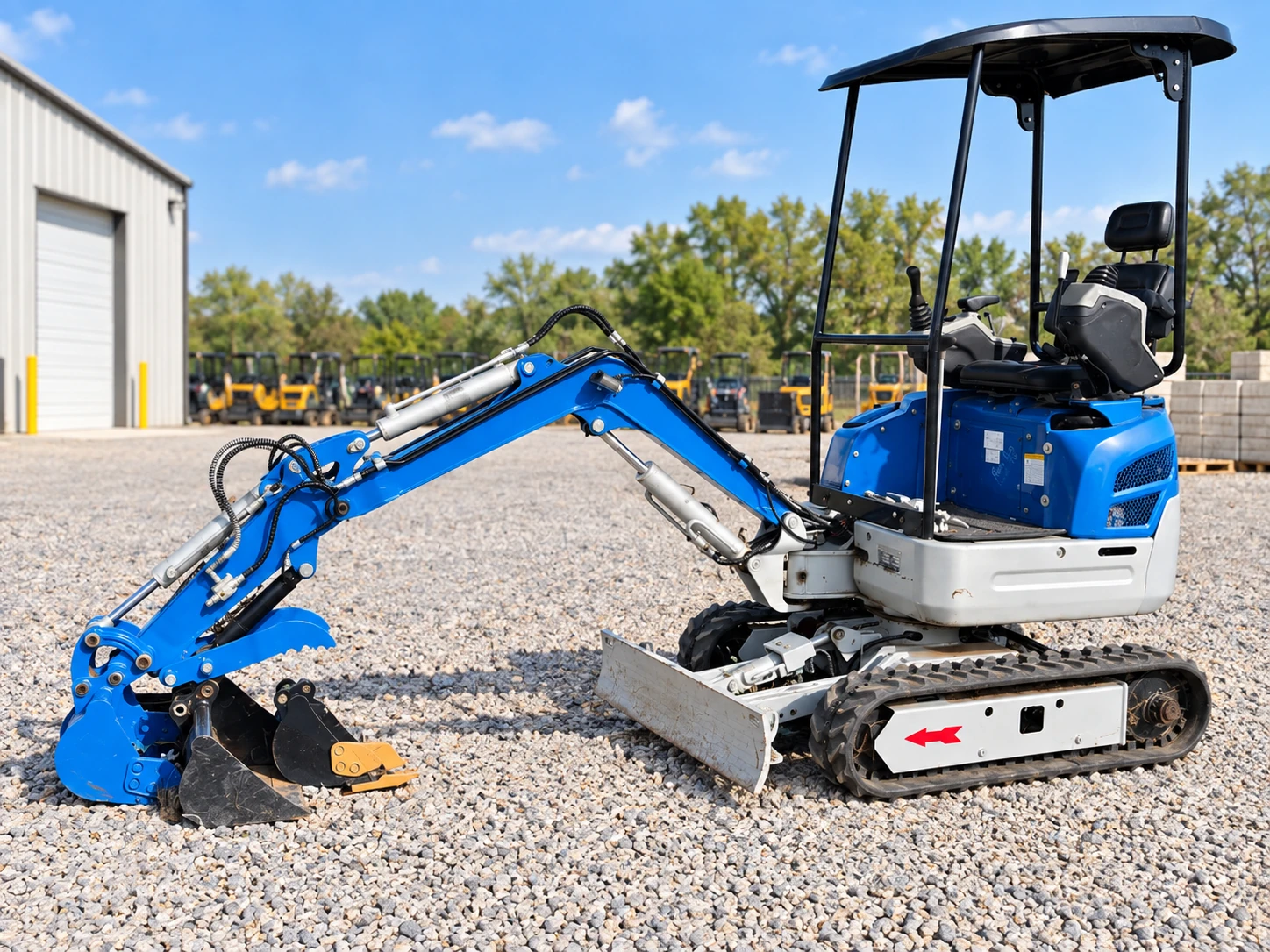
The RIPPA NDI15 mini excavator is Noble’s best tight-access option for a small-stump project. Its current rental setup includes a 16-inch tooth bucket and hydraulic thumb, with expandable tracks and a swing/offset boom. An optional ripper tooth is listed at $20 per day for roots, tough clay and stubborn ground. The page recommends a clear gate opening of at least 42 inches.
First Decide Whether the Stump Must Be Removed
Full excavation is not always the best answer. If the goal is to mow safely, cover the area with soil or eliminate a visible trip hazard, stump grinding may reduce the wood below grade without opening a large hole. Grinding leaves much of the root system in place, which can be acceptable when no structure or hardscape will occupy the area.
Excavation makes more sense when the entire root mass conflicts with the next project. Examples include a shed or small foundation area, a retaining feature, a drainage route, new paving, a replacement tree location or grading that cannot work around the stump. Removing the root ball gives direct access to the area, but it also creates a hole, produces bulky debris and disturbs more soil.
Define the finished condition before renting equipment. A stump that needs to disappear below a lawn is a different project from a stump located where a footing or trench must go. The correct goal determines whether you grind, excavate or leave it in place.
Why “Small Stump” Is Not a Complete Description
Two stumps with similar trunk diameters can behave very differently. One may be decayed with shallow roots; another may be sound with wide structural roots. Remaining trunk height can provide leverage, while a stump cut flush with the ground offers little material to grip. Soil condition, slope and previous grading also affect how easily roots can be exposed.
Nearby objects may be the real limit. A stump beside a foundation, fence, irrigation valve, septic component, utility line, retaining wall or finished driveway leaves less room to excavate. A root may extend under an improvement that cannot be disturbed. In that case, a smaller machine does not automatically make full extraction safe.
That is why Noble should not promise a maximum stump diameter. The work should begin by exposing enough of the root system to understand it. If the root ball, access or surrounding conditions exceed the machine’s safe capability, change the method or use qualified help.
Contact Texas811 Before Digging Around Roots
Stump removal is excavation. Texas811 says homeowners or contractors must contact 811 at least two business days before digging, excluding weekends and holidays. Submit the locate request early enough to receive responses and review the marks before equipment arrives.
Public locating does not identify every buried feature on private property. Irrigation, low-voltage landscape lighting, private electrical feeds, pool lines and some facilities after the meter may require records, careful inspection or a private locator. Roots can grow around lines, so visible root direction is not a utility map.
Preserve the marks during the project. If a public mark or suspected private line crosses the root zone, follow the facility owner’s requirements and keep machine excavation away from it. Never use the bucket or ripper tooth to probe for an unknown line.
Measure the Complete Equipment Route
The RIPPA NDI15 page lists an approximate minimum width of 40.5–41 inches with the tracks retracted and recommends a clear opening of 42 inches or wider. Measure the gate with hinges, latch hardware and posts included. Then check every turn after the gate, not just the entrance.
Look for air-conditioning equipment, meters, tree trunks, roof overhangs, steps, drainage inlets, narrow side yards and edges that may not support the machine. The excavator needs enough room at the stump to expand and stabilize its tracks, lower the blade, swing the boom and place spoil without contacting people or property.
Plan how the excavator will leave after the stump is out. Do not pile the root ball, branches and soil in the only exit path. Decide where debris and backfill will be staged before excavation begins.
How the Mini Excavator Helps
Expose the root system
The included 16-inch tooth bucket can remove soil beside major roots in controlled sections. Start away from the trunk where there is room to see what the bucket is doing. Work around the stump gradually rather than digging one deep hole that leaves the machine on an unstable edge.
Separate stubborn roots
The optional ripper tooth is currently listed at $20 per day and is intended for roots, tough clay and compacted or stubborn ground. It can concentrate the machine’s digging action along an exposed root. It is not a substitute for locating utilities or understanding what lies below the surface.
Handle the freed stump
The included hydraulic thumb can help grip roots, logs, rocks, brush and debris after they are loosened. A thumb improves control compared with balancing a stump in the bucket, but it does not guarantee that every root ball can be lifted. Machine position, reach, load shape, soil and safe rated capability still control the operation.
Backfill the hole
The front blade and bucket can return loose soil after the stump is removed. Expect the root ball to leave a void larger than the visible trunk. Remove unsuitable wood and debris, use appropriate fill for the next project and place it in manageable layers rather than pushing everything back at once.
A Practical Stump-Removal Workflow
- Choose removal or grinding. Base the decision on the next use of the area, not just the visible stump.
- Complete utility locating. Contact Texas811 and identify private lines separately when needed.
- Clear and measure access. Remove loose branches and confirm the entire route plus working room.
- Plan debris handling. Decide whether the stump will be cut down further, loaded, staged or hauled away.
- Expose the major roots. Dig controlled sections and inspect before applying force.
- Separate roots deliberately. Use the bucket or suitable approved attachment within safe machine limits.
- Test movement. Rock or reposition the stump only after enough resistance has been removed.
- Handle the root ball carefully. Keep people clear and place it on stable ground.
- Restore the area. Remove debris, backfill for the intended use and account for later settlement.
Do Not Try to Yank the Stump Out in One Move
Blind pulling creates several problems. The root system may be larger than expected, a root may pass under an improvement, or the stump may release suddenly. Sudden movement can shift the machine, swing debris or damage nearby property. More force is not the answer when the resistance is unknown.
Expose the roots first and reduce the connection in stages. Keep the machine on stable ground and avoid working across an unsupported hole edge. If the stump does not move with a controlled method, stop and reassess rather than repeatedly jerking the controls.
Do not wrap an unverified chain or strap around the stump and use the excavator as a pulling vehicle. Rigging capacity, attachment points, angles and shock loading all matter. The rental page does not advertise stump-pulling rigging, so do not invent a setup or attach to a point that Noble has not approved.
Keep People Out of the Swing and Pinch Zones
Stump work produces an irregular load with roots that can catch and then release. Establish an exclusion area around the machine, boom and stump. No one should stand beside the bucket to point at a root, between the machine and a fence, or under a raised root ball.
Use one clear communication method and stop the machine before anyone approaches. Keep children and pets away from the entire work area. OSHA’s struck-by guidance identifies moving heavy equipment as a major source of risk; residential property does not eliminate that hazard.
Lower the attachment before leaving the operator position. Do not work under a raised bucket or stump. Follow the machine familiarization and rental instructions, and stop when visibility, slope or ground support is inadequate.
Plan for a Heavy, Awkward Piece of Debris
A root ball contains wood, roots and retained soil. It may be much bulkier than the stump looked in the ground. Decide whether it can remain on the property, needs to be broken down, or must be hauled to a destination that accepts it. Confirm acceptance before loading a trailer or container.
If hauling is required, do not guess at weight or trailer capacity. The tow vehicle, hitch, trailer, tires, brakes and axles must all be properly rated for the complete load. Soil stuck to the roots adds weight and may change how a disposal site classifies the material.
Place the stump on stable ground where it will not roll, block drainage or trap the machine. If it must be reduced with a saw, that is separate hazardous work requiring the correct equipment, skill and procedures. Excavator rental does not make chainsaw work safe.
When a Stump Grinder Is the Better Tool
Grinding is often better when excavation would disturb a large finished area or the goal is simply to remove the above-grade obstruction. It can avoid handling an intact root ball and may reduce the amount of backfill needed. The remaining roots will decay in place, so the area should still be planned for the intended surface.
Excavation is more appropriate when buried wood cannot remain where new work is planned. It also makes sense when the stump is already loose or the root system must be exposed for another project. Neither method is universally better; the project outcome decides.
If the stump is next to a structure, under utilities, on a difficult slope or connected to a standing or unstable tree, use a qualified tree or excavation professional. This article addresses a stump that remains after the tree has already been safely removed.
DIY Rental or Operator Service?
A DIY rental can fit an open, clearly marked property where the renter is comfortable with compact equipment and the stump is separated from structures and utilities. The current RIPPA page lists $150 for up to four hours and $200 for up to eight hours. The hydraulic thumb and 16-inch bucket are included.
Noble lists operator service at $100 per hour with no minimum. Operator service is the better question when access is tight, the stump is near improvements, the site is sloped, the renter lacks excavator experience or the root system is more complicated than expected. An operator runs the machine; the property owner still needs to complete utility planning and decide where debris will go.
Prepare before the rental clock starts. Remove loose brush, complete the locate process, measure access, choose the disposal plan and mark the desired finished grade. Paid machine time should be spent excavating and restoring—not deciding what to do with the stump.
After the Stump Is Gone
Remove loose roots and wood that would create voids. Backfill according to the next use of the area and expect some settlement where a root mass was removed. Do not build a structural pad, footing or hardscape on casually dumped soil. Projects carrying loads may need properly selected material, controlled placement and professional preparation.
If the surrounding property also needs brush and small-tree cleanup, read Can a Skid Steer Clear Brush and Small Trees? For another excavation project involving buried concrete and awkward debris, see How to Remove Old Fence Posts and Concrete Footings.
Noble Construction serves Jonestown and nearby Central Texas communities with mini excavator rentals, delivery and operator options. Visit the Project Advice hub for more project-first equipment guidance.
Frequently Asked Questions
Can the RIPPA NDI15 remove a small tree stump?
The RIPPA NDI15 is offered for stump-removal and tight-access excavation work, and its bucket, hydraulic thumb and optional ripper tooth can help expose roots and handle freed debris. Suitability depends on the actual root system, access, utilities, soil, nearby improvements and safe machine limits.
How large a stump can a mini excavator remove?
There is no reliable diameter-only answer. Species, root spread, soil, decay, remaining trunk height, slope, access and nearby structures all affect difficulty. Inspect and expose the root system before deciding whether the stump can be removed safely with the machine.
Is stump grinding better than digging the stump out?
Grinding is often better when the goal is to reduce the stump below grade while limiting excavation. Digging is more appropriate when the root mass must be removed for a foundation, hardscape, drainage route or other planned work. The best method depends on the next use of the area.
Do I need to contact 811 before removing a stump in Texas?
Yes. Stump removal disturbs the ground. Texas811 says homeowners or contractors must contact 811 at least two business days before digging, excluding weekends and holidays. Private irrigation, lighting and service lines may need separate identification.
Should I rent the mini excavator or request an operator?
DIY rental can fit an open, clearly marked site when the renter is comfortable operating compact equipment. Noble currently lists operator service for the RIPPA NDI15 at $100 per hour with no minimum. Operator service is the better option near structures or utilities, on difficult terrain or when the root system is more complicated than expected.
Research & Sources
Measure the gate and tell us what surrounds the stump.
Compare the current bucket, thumb, ripper tooth, delivery and operator options before choosing a rental window.