Mini Excavator vs. Trencher for Residential Trenches
A trencher can be excellent at making a long, consistent narrow cut. A mini excavator gives a homeowner more flexibility when the route turns, widens, changes depth or includes basins, fittings, roots, rocks and cleanup work.
Choose a trencher when the project is mainly a long, unobstructed, uniform trench and the machine, chain and soil conditions fit the job. Choose a mini excavator when the project needs variable trench width, changes in direction or depth, larger excavations for catch basins or fittings, deliberate spoil placement, or other digging and cleanup on the same rental. For many residential drainage projects, versatility matters as much as feet of trench per hour.
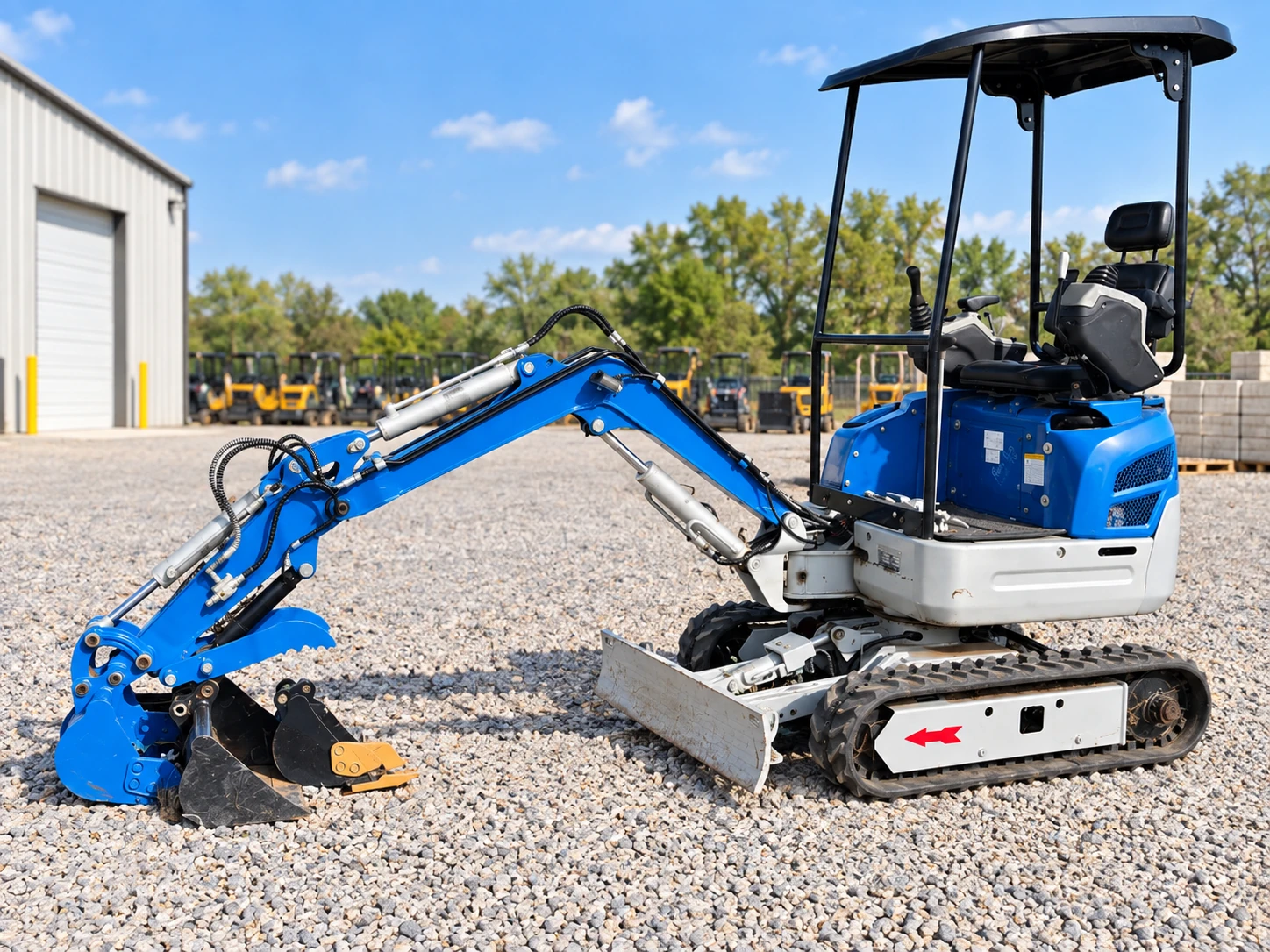
For a residential project that needs more than one straight narrow cut, Noble's RIPPA NDI15 mini excavator is the most flexible current rental. It includes a 16-inch digging bucket and hydraulic thumb; an 8-inch trenching bucket is listed at $20 per day. The machine is about 40.5–41 inches wide at minimum, with a 42-inch-or-wider clear gate recommended. The current rate is $150 for up to four hours or $200 for up to eight hours, and operator service is listed at $100 per hour with no minimum.
The Difference Is More Than Trench Width
A dedicated trencher and a mini excavator remove soil in fundamentally different ways. A chain trencher advances along a route while its digging chain cuts a relatively consistent slot. An excavator uses a bucket to remove individual bites of soil, so the operator can change width, depth and direction as the project develops.
That makes a trencher attractive for repetitive linear work. Ditch Witch describes walk-behind trenchers as suited to residential utility and landscaping work, and its current product literature shows that trench dimensions vary substantially by machine and attachment. The important lesson is not to assume every trencher makes the same cut: match the exact machine to the required width, depth, soil and access.
An excavator trades some straight-line specialization for control and versatility. It can open a wider section for a catch basin, turn a corner, excavate around a root or obstacle, dig a discharge area, and then use its blade for rough backfill. On a small property, eliminating machine changes can matter more than maximizing production on the straight portions.
When a Trencher Has the Advantage
Long, consistent runs
If the route is open and the trench needs essentially the same cross-section from start to finish, a trencher can be efficient. The operator follows the marked alignment rather than repeatedly repositioning a boom and bucket.
Minimal excavation width
A narrower cut can mean less spoil to handle and less surface to restore. That can be valuable for cable, irrigation or certain pipe installations where the design allows a narrow trench. Exact trench width and depth must come from the actual trencher configuration and project requirements, not a generic number.
Simple geometry
A straight run with no basins, junction boxes, broad fittings or changes in direction plays to a trencher's strength. Once the project starts needing multiple excavation shapes, the advantage can shrink.
When a Mini Excavator Has the Advantage
Drainage structures and fittings
Residential drainage rarely consists only of a slot. Catch basins, pop-up emitters, junctions and outlet transitions may require larger working areas. An excavator can widen only those sections instead of forcing the entire trench to one shape.
Turns and changing depths
With an excavator, the operator can reposition and approach a turn from a new angle. The bucket also makes it easier to expose and verify grade at selected points. That does not replace layout: drainage slope should be planned and checked with appropriate leveling tools rather than judged from the operator's seat.
Handling what comes out of the ground
A bucket can place spoil on a chosen side, separate useful topsoil from subsoil, load unwanted material, and move loose soil during backfill. The NDI15's included hydraulic thumb also gives the operator a way to handle roots, rocks and debris that a bucket exposes.
One machine for several tasks
If the same project includes removing a small obstruction, opening a basin area, trenching, shaping an outlet and cleaning up, an excavator can reduce equipment changes. This is especially useful for homeowner projects where setup and transport consume a meaningful part of the day.
Start With the Installed System, Not the Machine
Before reserving equipment, decide what is actually going into the trench. Pipe diameter, bedding, fittings, wire or conduit requirements, drainage structures and the designed depth all affect the excavation. Utility work may also have requirements that go well beyond the scope of an equipment guide. Follow the applicable product instructions, utility requirements, plans and local rules for the installation itself.
For drainage, identify a lawful and workable outlet before digging. A machine can create a trench quickly, but it cannot fix a system that has nowhere appropriate to discharge. Mark high and low points, locate basins and transitions, and confirm how the finished surface will drain after restoration.
Access Can Decide the Question Before Digging Starts
Measure the entire route from unloading point to work area. The RIPPA NDI15 has an approximate minimum width of 40.5–41 inches, and Noble recommends a 42-inch-or-wider clear gate. Check turns, fence posts, eaves, air-conditioning equipment, trees, slopes and the actual room needed to swing and position the machine.
Do the same with any trencher being considered. Walk-behind does not automatically mean tiny. Manufacturer specifications show meaningful differences in size and weight between trencher models. Verify the exact rental unit rather than assuming it will pass a gate because a different model did.
Also plan where spoil will go. A narrow access lane can become unusable if the first section of excavation blocks the only path to the backyard.
Rock, Roots and Unknown Ground Change the Plan
No machine should be promised to cut every soil condition. Trencher performance depends on the chain, teeth, machine and material. Excavator production depends on bucket choice, machine size and what the operator encounters. Buried concrete, large rock, roots and previous construction can change the job quickly.
Do not assume a mini excavator will break solid rock simply because it can dig ordinary soil. Noble lists a concrete breaker attachment for the NDI15 at $100 per day and a ripper tooth at $20 per day, but attachment suitability still depends on the actual material and project. Stop and reassess rather than forcing equipment beyond its intended use.
Call 811 Before Any Residential Trench
Texas811 states that homeowners and other excavators must contact 811 at least two business days before digging, excluding weekends and holidays. After the request, wait for responses and confirm the affected utility operators have responded before excavation. Respect the marks and dig with care.
Texas811 also explains that reasonable care is required around marked underground pipelines and discusses an 18-inch tolerance-zone concept in its guidance. Do not use a machine bucket or trencher chain to guess the exact location of a marked facility. Follow Texas811 guidance and the utility operator's instructions for exposing facilities safely.
Remember that a public 811 locate may not identify every private facility on a property. Irrigation, septic components, low-voltage lighting, private electrical runs and other owner-installed lines may require separate identification. Walk the route before digging and resolve unknowns.
Trench Safety Is Separate From Machine Choice
OSHA identifies cave-ins as the primary trenching and excavation hazard. Its guidance also addresses underground utilities, water accumulation, safe access and egress, spoil placement and inspection. For work subject to OSHA requirements, protective systems and competent-person duties depend on the excavation and conditions.
Do not enter an excavation simply because it looks stable. Keep people away from operating equipment and suspended loads, and keep spoil and equipment back from excavation edges as required for the work. If a project creates a trench people must enter, treat entry safety as its own planning problem rather than assuming a compact machine makes the excavation harmless.
Think About Backfill Before You Open the Trench
A trencher may leave a relatively narrow windrow of spoil, while an excavator can deliberately place soil in piles. Either way, decide which material can go back, which must be removed and what bedding or imported material is required by the installed system.
Keep topsoil separate when practical. Do not mix sod, roots, construction debris and good backfill into one pile if restoration matters. For more detail, see Noble's guide to backfilling a trench and cleaning up the yard.
If the project is specifically a French drain, the equipment decision is only one part of the job. Noble's French drain trench equipment guide covers outlet planning, excavation and cleanup in more detail.
DIY Rental vs. Operator Service
DIY rental makes sense when the route is well marked, utilities have been addressed, access is straightforward, the project design is settled and the renter is comfortable with compact equipment. Have layout and materials ready before the rental clock starts.
Operator service can make sense when the route is tight, the trench must follow controlled elevations, obstacles are close, spoil placement is difficult or the renter has little excavation experience. Noble currently lists NDI15 operator service at $100 per hour with no minimum. That is an equipment-operation service; specialized utility, plumbing, electrical or drainage design work should be handled by the appropriate qualified professional when required.
A Simple Decision Checklist
- Mostly long, straight, uniform trench: compare dedicated trenchers available from a suitable rental source.
- Turns, basins, wider sections or multiple excavation tasks: a mini excavator is usually more adaptable.
- Tight backyard access: measure the complete route and exact machine.
- Unknown utilities: stop and resolve them before excavation.
- Grade-sensitive drainage: establish elevations and outlet before digging.
- People entering the trench: address excavation safety requirements separately from equipment selection.
Frequently Asked Questions
Is a trencher faster than a mini excavator for a straight trench?
Often, yes, when the route is long, open, consistent and suited to the trencher. A mini excavator is usually more flexible when the trench changes direction, widens for structures or fittings, crosses difficult material, or requires separate excavation tasks.
Is a mini excavator better for drainage trenches?
It can be when drainage work needs variable width, access to fittings or basins, controlled spoil placement, grade corrections or excavation around obstacles. For a long uniform run, a trencher may be more efficient if site and soil conditions suit it.
Does Noble Construction rent a trencher?
Noble Construction's current rental catalog does not list a dedicated trencher. Noble does list two compact mini excavators, including the RIPPA NDI15 and SDLANCH SDLE18P.
Do I need to contact 811 before trenching in Texas?
Yes. Texas811 says excavators, including homeowners, must contact 811 at least two business days before digging, excluding weekends and holidays, and confirm affected utilities have responded before excavation.
Should I rent a mini excavator or ask for an operator?
DIY rental can fit a clearly planned, accessible project for someone comfortable operating compact equipment. Operator service can make more sense when grade control, tight access, nearby obstacles or unfamiliarity with excavation make precision more important.
Research & Sources
- Texas811 — homeowner and excavator safe-digging process
- Texas811 — Excavator FAQs and tolerance-zone guidance
- OSHA — Construction Trenching and Excavation eTool
- OSHA — 29 CFR 1926.651 Specific Excavation Requirements
- Ditch Witch — walk-behind trencher specifications and selection considerations
Related Project Advice
How to Backfill a Trench and Clean Up the Yard →
Best Equipment for Digging a French Drain Trench →
Will a Mini Excavator Fit in My Backyard? →