Best Way to Remove Old Landscape Rock and Gravel
Old decorative rock is heavy, mixed with soil and usually trapped around edging, roots and irrigation. The efficient method is to plan the destination first, separate the material deliberately and use equipment only where the route and surface can support it.
For a small bed, use a rake, flat shovel and containers. For a larger accessible area, loosen the rock and separate edging or fabric first, then use a mini skid steer with a bucket to carry the bulk material to a stockpile, trailer or approved disposal container. Do not scrape blindly: identify irrigation, lighting and shallow utilities, protect finished surfaces, and know whether the receiving site will accept clean rock or mixed debris before loading.
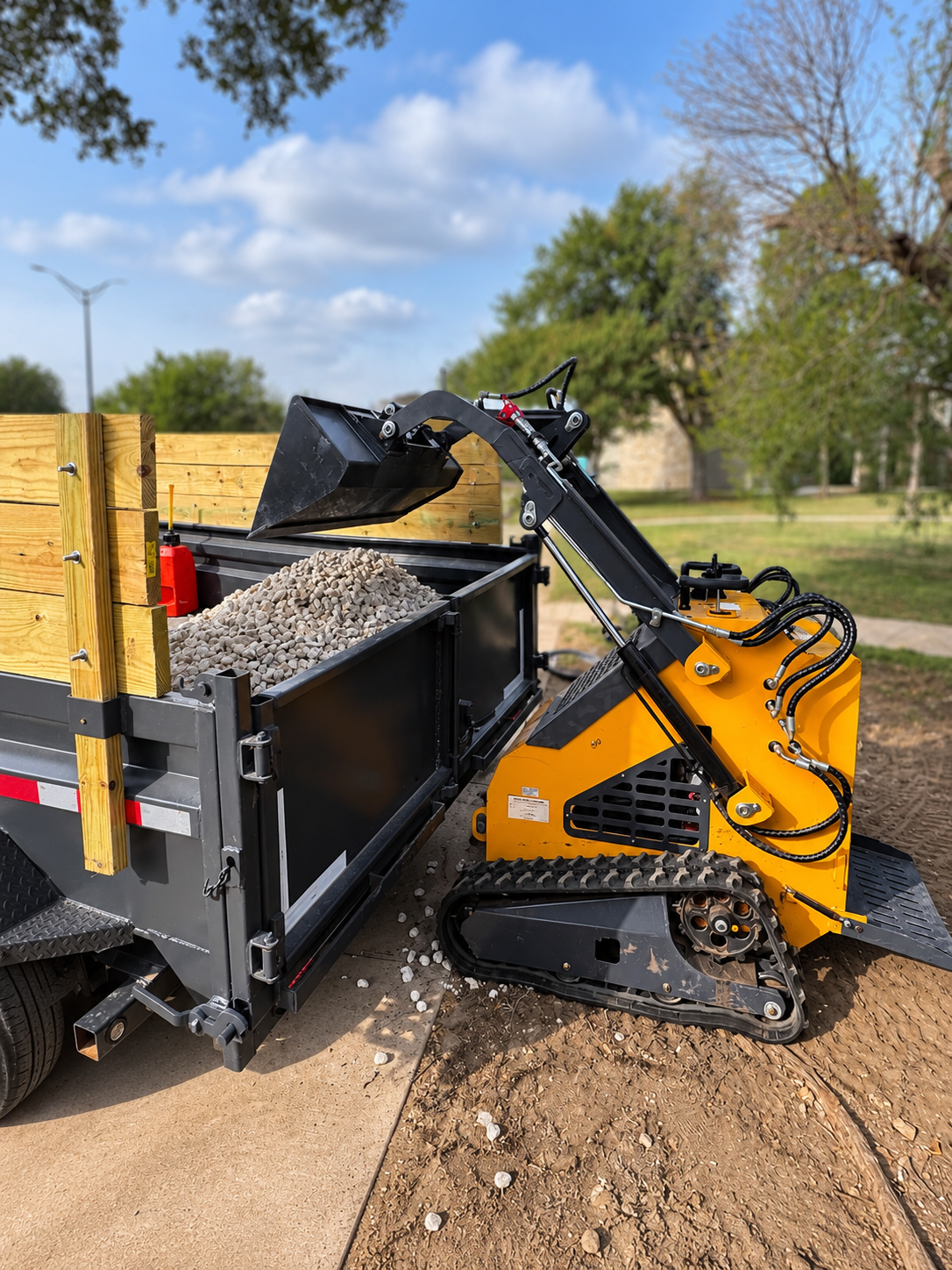
The ZJ-380 mini skid steer is the best starting point in Noble’s lineup for landscape-rock removal in a gated yard. Its general-purpose bucket is included, and the current page lists the machine at approximately 41–43 inches wide with a bucket approximately 44–45 inches wide. On a large open site with substantially more material, the CAT 259D compact track loader may improve production when the access and surfaces support its much greater size and weight.
Decide Where the Rock Is Going Before You Touch It
The removal method depends on the destination. Clean decorative rock may be useful in another bed, around a shed, beside a drainage feature or to another property owner. Rock contaminated with soil, roots, torn landscape fabric, plastic edging and trash is less attractive for reuse and may be handled differently by a recycler, landfill, transfer station or hauling service.
Call the intended destination and describe the material accurately. Ask whether it accepts clean rock, mixed soil and rock, landscape fabric, concrete edging or treated wood. Confirm how the load must be separated and whether there are weight or container restrictions. Do not fill a trailer or rented container first and discover afterward that the destination will not accept it.
If the material will be reused on the same property, choose the new location before removal. A temporary pile placed in the machine route creates double handling. A pile on turf can bury grass and leave fine rock that is difficult to remove later. Use a stable staging area with enough room for the loader to approach, dump and leave.
Estimate the Job by Area, Depth and Contamination
A thin decorative layer is different from years of rock worked into soil. Probe several locations with a hand tool to see the approximate depth and what lies below. Check the center of the bed, the edges and low areas where soil may have accumulated. Do not assume the visible surface represents the entire layer.
Look at how much organic matter is mixed into the stone. Leaves and surface weeds can often be removed before machine work. Soil that has filled the gaps may make screening worthwhile if the rock is valuable enough to reuse. Torn fabric, roots and plastic edging slow bucket work because they catch, stretch and drag unrelated material into the load.
Mark irrigation heads, valve boxes, lighting cable, drain inlets, cleanouts and any other shallow feature. The goal is not to remove every pebble with the machine. Bulk removal should stop short of vulnerable edges so the final cleanup can be completed by hand.
Prepare the Bed Before Bringing in a Loader
Remove plants and loose debris
Decide which plants are staying. Prune or temporarily protect vegetation that narrows the route. Pull loose trash, branches and wire from the bed so they do not wrap around the machine or disappear into the disposal load. If plants are being transplanted, complete that work before the rock pile blocks access.
Separate edging
Metal, plastic, wood, masonry and concrete edging should not be treated as one material. Expose fasteners and joints, remove manageable pieces and create a clear limit for the bucket. Hidden edging can bend, launch debris or pull soil and irrigation components when the bucket catches it.
Deal with landscape fabric deliberately
Old fabric often tears rather than lifting cleanly. Where possible, uncover an edge, remove loose rock from the top and roll or cut the fabric into controlled sections. Never have someone pull fabric beside a moving loader. Stop the machine, lower the bucket and clear entangled material only using the safe procedure for that equipment.
Why a Mini Skid Steer Works Well
Landscape rock removal is mostly repeated scooping and carrying. The ZJ-380’s included general-purpose bucket can collect loosened material, travel between the bed and staging area, and place the load without repeated wheelbarrow trips. Its compact footprint is the reason to consider it—not a claim that it can reach every yard.
The rental page lists the machine itself at approximately 41–43 inches wide, but the bucket is approximately 44–45 inches wide on common configurations. Measure the widest restriction, including gate hinges, posts, air-conditioning equipment and turns after the gate. The work area also needs room to approach the bed without driving over utilities, edging or unsupported surfaces.
The current ZJ-380 page lists $125 for up to four consecutive hours and $175 for up to eight hours. The bucket is the only attachment currently offered. That makes it a good fit for loose-material handling, but not a promise of powered screening, grappling, tilling or specialty rock-removal attachments.
Use the Bucket for Bulk Removal, Not Blind Scraping
Begin in an open section where the rock layer and underlying surface are visible. Keep the bucket shallow and remove material in controlled passes. If soil begins entering the load, adjust the angle or switch to hand cleanup. Digging deeper does not necessarily make the job faster; it can create a larger backfill and grading project.
Work toward an exit instead of surrounding the machine with piles. Keep a clear lane between the removal area and the stockpile or container. Avoid sharp turns on turf and repeated counter-rotation in one spot. Even a compact rubber-tracked machine can tear sod and rut soft ground.
Do not let anyone stand in front of the bucket, beside the tracks or between the machine and a wall, fence or vehicle. Keep children and pets outside the operating area. OSHA identifies moving equipment as a struck-by hazard; the same basic separation matters in a residential yard.
When the CAT 259D Is the Better Choice
The CAT 259D is appropriate when the material quantity is large, the site is open and the machine can work without threading through finished landscaping. Its current rental page lists a published width of approximately 66–69 inches and an operating weight of approximately 8,846–8,945 pounds depending on configuration. That difference changes the access and surface plan.
Choose the CAT for production, not simply because it is available. A large open property, commercial-style bed, long gravel strip or loading operation may justify the full-size loader. A narrow Cedar Park side yard usually does not. The CAT page warns that its weight can damage turf, pavement edges, irrigation and soft ground even though it uses rubber tracks.
The CAT 259D is listed at $300 per full rental day. Machine-only rental requires an application and approval for experienced individuals. Operator service is listed at $100 per hour in addition to the machine rental. For a homeowner who needs full-size production but does not operate heavy equipment, the operator option is the appropriate comparison.
Plan the Loading and Hauling Side
Rock becomes a hauling problem quickly because it is dense. Do not estimate trailer suitability from bed area alone, and do not use the loader bucket as a scale. The tow vehicle, hitch, trailer, brakes, tires, axles and securement all have ratings that must be respected. Confirm the allowable payload after accounting for the trailer itself and any other equipment.
Place the trailer or container where the machine can approach on stable ground without crossing a sidewalk edge, septic component or soft lawn. Maintain clearance around the loading area and distribute material as required for the hauling setup. Never mound rock based on available container volume while ignoring weight.
If a third party is hauling, ask how clean the load must be and who is responsible for overage or contamination. Keep fabric, roots, metal edging and trash out of a clean-rock load unless the receiver has agreed to accept them.
Contact 811 When the Work Will Disturb the Ground
Raking loose surface stone is not the same as excavation, but many removal projects progress into scraping, digging out edging, removing shrubs or changing grade. Texas811 says homeowners or contractors must contact 811 at least two business days before digging, excluding weekends and holidays. Build that waiting period into the project instead of deciding after the machine arrives.
Public utility locating may not identify private irrigation, low-voltage lighting, pool lines or owner-installed electrical feeds. Use property records, visible controls and a private locator when needed. Do not assume landscape fabric or the existing rock layer protects what is underneath.
If a marked or suspected line crosses the bed, leave a controlled hand-work zone and follow the utility owner’s requirements. A compact machine does not make unknown underground facilities safe.
A Practical Removal Sequence
- Choose reuse, transfer or disposal. Confirm what the destination accepts before creating a load.
- Inspect several parts of the bed. Check depth, soil contamination, fabric, roots and edging.
- Mark vulnerable features. Identify irrigation, lighting, drains, cleanouts, plants and finished surfaces.
- Complete utility locating when digging is involved. Contact 811 and address private lines separately.
- Clear the route. Measure the gate and every turn using the bucket’s widest dimension.
- Remove loose debris and edging. Separate materials that do not belong in the rock load.
- Loosen and bulk-load the rock. Use shallow, controlled passes rather than digging blindly.
- Finish edges by hand. Work carefully around plants, walls, utilities and irrigation.
- Restore the surface. Correct grade, replace needed soil and prepare for the next landscape finish.
Restoring the Area After Removal
Removing the rock exposes the condition that was hidden below it. The area may contain compacted soil, depressions, fabric fragments and a grade that directs water incorrectly. Do not cover those problems immediately with mulch, topsoil or sod.
Remove remaining debris and decide how the finished area should drain. Preserve required clearance around foundations and do not build soil or mulch against siding or weep paths. If the area will become lawn, account for the depth of soil and sod instead of filling to the final height with subsoil. If it will remain a bed, prepare it for the specific plants and finish material rather than recreating the old rock profile automatically.
For larger grading questions, see How to Level a Backyard Before Sod or Landscaping. If rock is being moved to another part of the property rather than removed, the backyard gravel-moving guide covers route and pile planning.
DIY Rental vs. Operator Service
A ZJ-380 rental can make sense when the site is open enough for the bucket, the rock is already loosened, the destination is prepared and the renter is comfortable using compact tracked equipment. Schedule hand preparation before the rental clock begins so paid machine time is spent moving material rather than pulling weeds or deciding where to dump.
The current mini-skid page does not advertise operator service, so do not assume one is included. For larger open work using the CAT 259D, Noble lists operator service at $100 per hour added to the machine rental. Operator service becomes the better choice when the machine size, surface conditions, loading plan or grading work is outside the property owner’s experience.
Noble Construction serves Leander and nearby Central Texas communities with equipment rental and delivery options. Visit the Project Advice hub for more project-first planning before choosing a machine.
Frequently Asked Questions
What is the easiest way to remove a large amount of landscape rock?
For a large accessible area, loosen and separate the rock first, then use a compact loader with a bucket to move it to a planned stockpile or approved hauling container. Hand tools are still needed along edging, utilities, irrigation and finished surfaces.
Can a mini skid steer remove landscape gravel?
Yes. Noble’s ZJ-380 mini skid steer has an included general-purpose bucket and is intended for dirt, gravel, landscaping and grading. It is most useful when the route is wide enough for the approximately 44–45-inch bucket and the work area supports tracked equipment.
Should landscape rock be reused or disposed of?
Clean, separated rock may be reusable elsewhere or transferable to someone who wants it. Rock mixed with soil, roots, fabric and trash is harder to reuse and may be rejected or priced differently by a disposal destination. Confirm the destination before loading.
Do I need to contact 811 when removing landscape rock?
Surface raking alone may not involve excavation, but scraping, digging, removing edging or changing grade can disturb the ground. Texas811 says homeowners or contractors must contact 811 at least two business days before digging. Private irrigation and low-voltage lines may need separate identification.
When is the CAT 259D better than a mini skid steer for rock removal?
The CAT 259D is better suited to a large open site where its much greater size can improve loading and material-moving production. The mini skid is usually the better starting point for gated residential yards and smaller removal areas.
Research & Sources
Measure the route and prepare the load.
Review the ZJ-380’s current access, bucket, pickup and delivery details before reserving.