Best Equipment for Small Landscape Demolition
Removing an old bed is rarely just “scoop it out.” Edging, roots, irrigation, lighting, fabric, rock and buried concrete can turn a simple cleanup into a careful dismantling job. The right compact machine depends on what is actually holding the landscape together.
For most small residential landscape demolition, use hand tools first to expose utilities and separate materials, then use a mini skid steer for bulk loading and carrying. Add a mini excavator when roots, buried edging, small concrete pieces or stubborn material need controlled digging and lifting. Plan the debris destination and machine route before demolition starts.
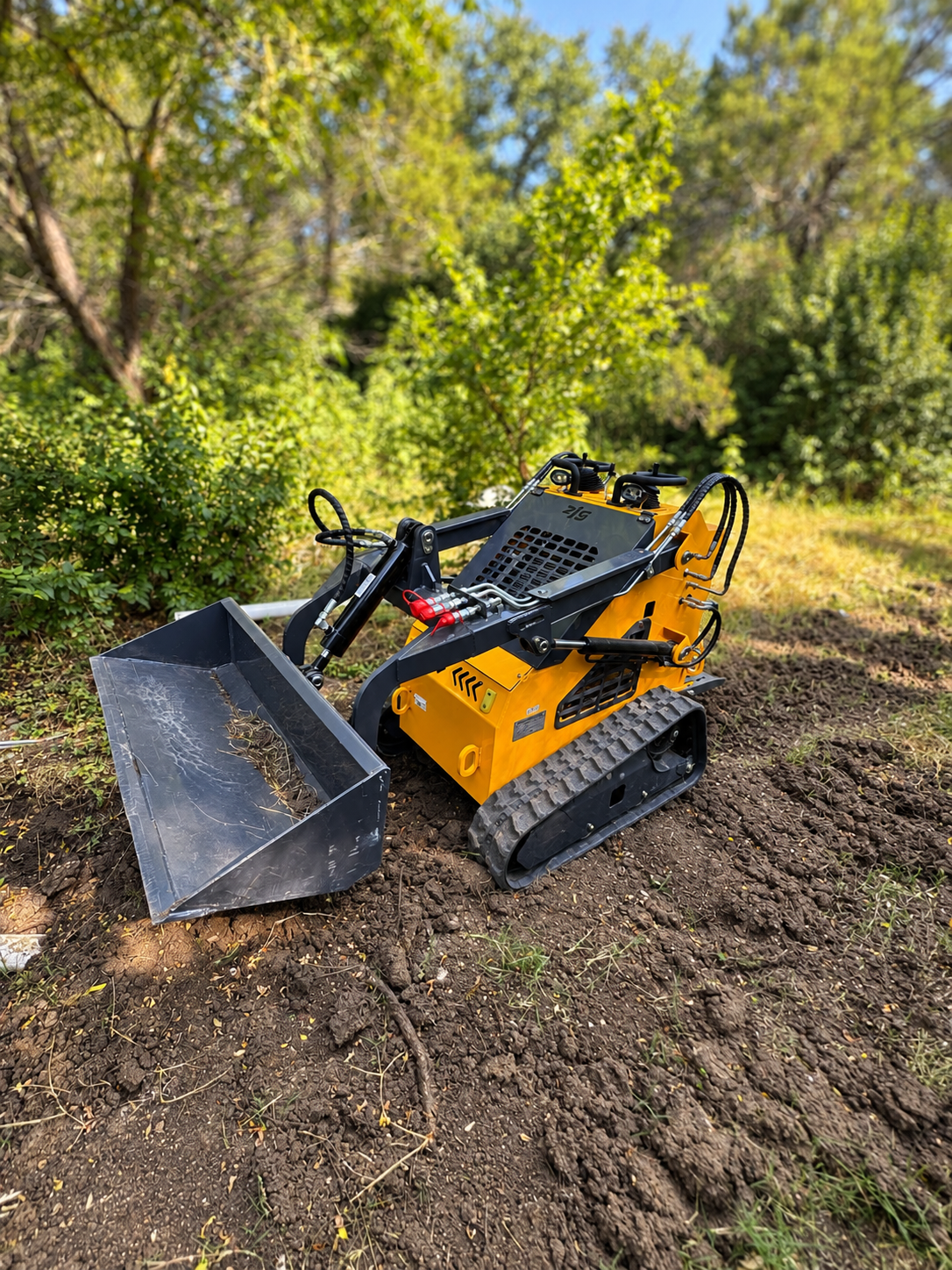
The ZJ-380 mini skid steer is the best starting point when the work is mostly loose material, loading and cleanup. Noble’s current rental page lists a general-purpose bucket as the only attachment, with the machine approximately 41–43 inches wide and the bucket approximately 44–45 inches wide on common configurations. When the job requires digging or grabbing roots and debris, the RIPPA NDI15 mini excavator adds a digging bucket and included hydraulic thumb, with other attachments available on its current rental page.
Start by Defining What “Demolition” Actually Means
A landscape bed can contain several different jobs stacked on top of one another. Decorative rock or mulch may need to be removed. Steel, plastic, stone or concrete edging may need to come out. Shrubs can have root systems wider than the visible plant. Old fabric can be buried under years of soil. Irrigation tubing and low-voltage lighting may cross the bed without obvious surface clues.
Walk the entire work area before bringing in equipment. Decide what stays, what gets transplanted, what gets reused and what becomes debris. Mark trees and plants that must remain. Locate valve boxes, drain inlets, cleanouts, downspout outlets, lighting fixtures and visible utility equipment. A five-minute walkthrough can prevent a loader bucket from turning a small bed removal into a sprinkler or electrical repair.
Then decide the finished condition. If the area will become lawn, the goal is different from preparing for a new patio, gravel strip or redesigned bed. Knowing the next use tells you how much material actually needs to leave and whether final grading is part of the same project.
Separate Materials Before You Start Loading
Demolition moves faster when debris is sorted as it comes apart. Clean decorative rock may be reusable. Soil can often stay on site if the new grade needs it. Metal edging, plastic, landscape fabric, treated wood and concrete should not automatically go into the same pile. Disposal sites and haulers may handle those materials differently, so confirm the destination before loading.
Remove surface material first
Rake mulch, loose stone and leaves away from edges and plant bases. This exposes fasteners, irrigation and the actual soil line. On a large bed, the mini skid can move the bulk material once the vulnerable edges are exposed, but the machine should not be used to blindly scrape everything down to bare dirt.
Take edging apart deliberately
Find stakes, spikes, joints and transitions. Long strips of metal or plastic can catch a bucket and whip or drag. Masonry edging may hide mortar or concrete below grade. Break the system into manageable sections rather than trying to pull an entire border with the machine.
Handle fabric as a separate layer
Old landscape fabric often tears into strings that wrap around debris and make clean loading difficult. Expose an edge, remove enough cover material to free it, then cut or roll controlled sections. Stop equipment before anyone approaches to clear tangled fabric.
Use the Mini Skid Steer for Material Movement
Once the bed is dismantled, most of the labor is repeated loading and carrying. That is where the ZJ-380 makes sense. Its bucket can move loosened soil, gravel, mulch and mixed landscape material from the work area to a stockpile or hauling point. It can also help rough-grade the cleared area after debris is gone.
Noble’s current ZJ-380 page lists $125 for up to four consecutive rental hours and $175 for up to eight hours. The machine uses rubber tracks and is listed at approximately 1,600 pounds. Its compact size helps in residential settings, but compact does not mean harmless: tracks can still disturb turf, soft ground, pavers and pavement edges.
Measure the whole route, not only the gate. The rental page notes a machine width around 41–43 inches, while the bucket is around 44–45 inches on common configurations. Check gate hinges, fence posts, air-conditioning equipment, downspouts, turns and the space needed to approach the pile. If the machine can squeeze through a gate but cannot turn into the work area, the measurement did not solve the real access problem.
Use a Mini Excavator When the Job Turns Into Digging
A mini skid steer is a loader. It is not the right tool for every buried obstacle. If shrubs have substantial roots, edging is concreted in, or old footings and rocks need to be exposed from below, a mini excavator can work more precisely.
Noble’s RIPPA NDI15 page lists a 16-inch tooth digging bucket and hydraulic thumb as included. The thumb is useful for handling loosened roots, rocks, brush and demolition debris. The page also lists a concrete breaker, ripper tooth, rake and other options for additional daily charges. Attachment choice should follow the material actually present; do not reserve specialty tools just because the project is called demolition.
The NDI15 is listed at $150 for up to four hours and $200 for up to eight hours, with operator service at $100 per hour and no minimum. The page recommends a clear gate opening of 42 inches or wider. As with any compact excavator, working room matters in addition to entry width: the boom, house and material pile all need space.
Do Not Treat Shrub Removal as a Tug-of-War
Trying to yank a rooted shrub with a loader can create uncontrolled movement and unnecessary strain. Cut the plant down to a manageable structure, expose the root crown and determine whether the roots can be severed or dug. A mini excavator is generally the more logical machine when the work requires digging around the root mass; the mini skid becomes useful again after the root ball is loose and needs to be carried away.
Keep people away from tensioned roots, chains and moving equipment. Do not improvise towing or pulling setups. If a plant is close to a foundation, fence, irrigation manifold or utility marking, hand exposure and controlled digging are more important than speed.
Protect the House, Fence and Finished Surfaces
Small landscape demolition often happens in the most crowded part of a property: beside the house. Establish a machine boundary around siding, windows, condensers, meters, fences and retaining features. If the operator cannot maintain comfortable clearance, stop short and finish that section by hand.
Plan turns so tracks do not repeatedly pivot on one patch of turf. Avoid driving over septic components, drain boxes, unsupported pavement edges or soft ground. If debris must cross a driveway, keep loose rock and soil off the travel surface so it does not become a slipping or tire-damage hazard.
Also think about where the bucket will be when it is raised. The safest travel position is generally low and controlled; carrying material high reduces stability and visibility. Follow the machine’s operating instructions and never allow riders.
Contact Texas811 Before Ground Disturbance
Landscape demolition often starts at the surface and then becomes excavation. Texas811 says homeowners and contractors must contact 811 at least two business days before digging, excluding weekends and holidays. The process gives affected utility companies time to mark their facilities, and Texas811 says the person digging must confirm responses and dig carefully around markings.
Do not assume every private line will be marked through the public one-call process. Texas811’s FAQ specifically notes that private lines are the owner’s responsibility and may require a paid private locate. Irrigation, landscape lighting, pool equipment, private service lines and other owner-installed systems deserve separate attention.
White-line or otherwise clearly define the proposed work area when appropriate, preserve markings during the project and stop if something does not match what you expected. Never use a machine to “find” a utility.
Plan the Debris Route Before the First Scoop
Choose a staging point that keeps the work flowing in one direction. The machine should be able to leave the bed, travel to the pile or trailer, dump and return without weaving around newly created debris. If a hauling container will be used, confirm that it accepts the material mix and that its placement leaves a stable loading approach.
Heavy materials such as soil, rock and concrete can reach trailer weight limits long before a trailer looks full. Do not estimate safe payload by volume or bucket count. The tow vehicle, hitch, trailer, tires, axles and brakes all have ratings that must be respected.
For reusable material, create a clean pile before demolition debris becomes mixed into it. A little sorting at the beginning can save significant rehandling later.
DIY Rental vs. Operator Service
DIY rental makes the most sense when the work area is open, the materials are understood, utilities are addressed and the renter is comfortable operating compact equipment. A simple bed where loose gravel and soil need to move from one side of a yard to another is very different from digging roots beside a house.
Operator service becomes more attractive when clearances are tight, buried obstacles are likely, the project needs several machine functions in a short window, or the homeowner does not want the learning curve. The NDI15 rental page currently lists operator service at $100 per hour with no minimum. The ZJ-380 page does not advertise operator service, so do not assume the same option applies to that machine.
Whichever route you choose, have the site ready before the rental clock starts: utilities handled, debris destination confirmed, gates unlocked, vehicles moved and hand-demolition completed where practical.
Common Mistakes That Make a Small Job Bigger
Scraping too deep. Removing useful native soil with the debris creates an unnecessary import-and-grading job. Stop bulk removal when contamination rises and finish the edges by hand.
Mixing everything together. Rock, soil, fabric, metal and green waste are easier to manage when separated early.
Ignoring the exit route. A machine that fits the bed but cannot reach the trailer efficiently may not save much labor.
Assuming compact equipment cannot damage the yard. Rubber tracks distribute load, but repeated turning and travel can still disturb turf and soft ground.
Starting before utility planning. The rental should be scheduled around safe-dig requirements, not the other way around.
A Practical Sequence for a Cedar Park Yard
First, photograph the bed and mark what stays. Second, arrange 811 locating when the project will break ground and identify private systems separately. Third, remove decorations, plants that will be saved, loose trash and accessible edging. Fourth, sort surface material and expose hidden layers. Fifth, bring in the mini skid for bulk movement or the mini excavator for excavation-heavy sections. Sixth, stage debris by destination. Finally, rough-grade the cleared area and finish sensitive edges by hand.
This sequence also works for homeowners in Leander, Lago Vista, Jonestown, Liberty Hill and Georgetown. The project conditions—not the city name—should determine the machine.
Frequently Asked Questions
What equipment is best for removing an old landscape bed?
For loose soil, mulch, gravel and general material movement, a compact mini skid steer with a bucket is usually the best starting point. A mini excavator is more useful when the work involves digging out roots, buried edging, small footings or other material that must be pried or lifted.
Can a mini skid steer remove shrubs?
A mini skid steer can help carry already-loosened shrubs, root balls and debris, but the bucket-only ZJ-380 should not be treated as a dedicated shrub-pulling attachment. Rooted material may need to be cut, dug or loosened first.
Do I need to contact 811 for landscape demolition?
If the project will break ground, Texas811 says to contact 811 at least two business days before digging, excluding weekends and holidays. Private irrigation, lighting and other owner-installed lines may require separate locating.
When is a mini excavator better than a mini skid steer for landscape demolition?
Use a mini excavator when the project is excavation-heavy: roots, buried concrete, stubborn edging or material that needs controlled digging and lifting. Use the mini skid when most of the job is loading, carrying, spreading or cleanup.
Should I rent equipment or ask for an operator?
DIY rental can make sense for a clear, accessible site and an operator who is comfortable with the machine. If the work is tight to a house, fence or utilities, involves difficult digging, or you do not have equipment experience, operator service can reduce the learning curve and help keep the project controlled.
Related Project Advice
- Best Way to Remove Old Landscape Rock and Gravel
- Mini Skid Steer vs. Full-Size Skid Steer for Landscaping
- Will a Mini Excavator Fit in My Backyard?
Research & Sources
- Texas811 — Homeowner / DIYer guidance
- Texas811 — Utility locating FAQ, including private lines
- OSHA — skid-steer pinch-point hazard bulletin
Need compact equipment for a landscape teardown?
Compare the bucket-only ZJ-380 for material movement with the RIPPA NDI15 when the project needs controlled digging and lifting.