9 Mini Skid Steer Mistakes to Avoid on Landscaping Jobs
A mini skid steer can replace a lot of wheelbarrow and shovel work, but first-time renters often lose time by solving the wrong problem first. Access, material staging, turns, ground conditions and finish grading matter as much as learning the controls.
The biggest first-time mistake is renting the machine before planning the job. Measure the entire travel route, stage material so the loader can work in a simple loop, protect soft surfaces, keep loads controlled, avoid sharp track pivots, and leave detail work for hand tools. If the project breaks ground, handle utility locating before the rental day.
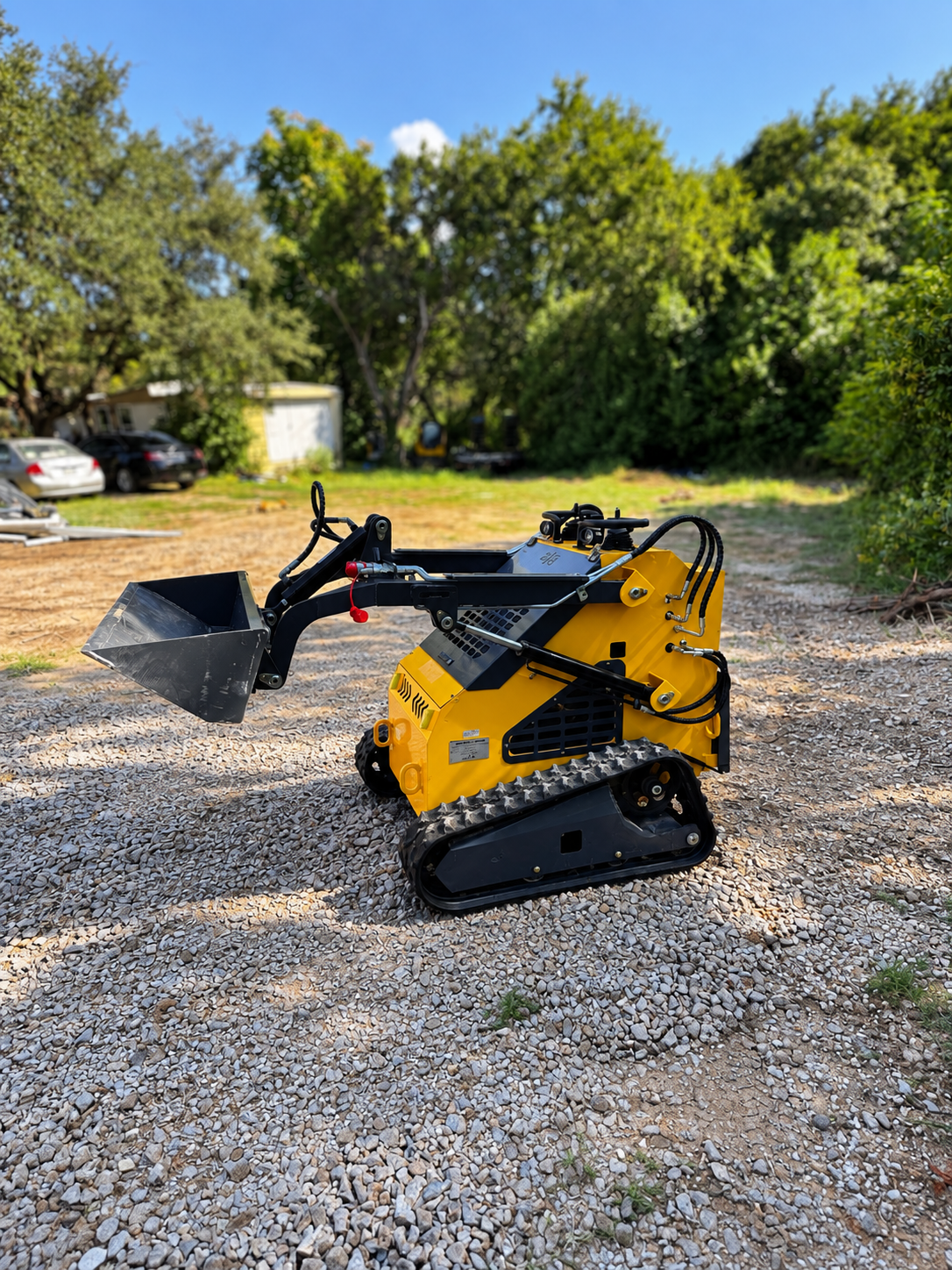
For tight-access residential material moving, the ZJ-380 mini skid steer is Noble Construction's compact tracked option. The current rental page lists a general-purpose bucket as the only attachment, approximately 41–43 inches of machine width depending on build, approximately 1,600 pounds operating weight, and 4-hour or 8-hour rental options. It is intended for dirt, gravel, landscaping and grading—not excavation that requires a digging boom or specialty attachment.
Mistake 1: Measuring the Gate but Not the Whole Route
A gate measurement is only the first checkpoint. Walk from the unloading point to the work area and look for fence posts, hinges, air-conditioning units, downspouts, tree trunks, retaining walls, patio corners and tight turns. Noble's current ZJ-380 page lists the machine around 41–43 inches wide and notes common bucket widths around 44–45 inches. A gate that clears the machine may still be too narrow for the bucket or leave no room to turn.
Also check overhead branches and the space needed to approach a pile squarely. A route that forces repeated three-point turns will consume rental time and increase surface disturbance. Measure the narrowest point and sketch the travel path before reserving.
Mistake 2: Putting the Material Pile in the Wrong Place
The machine is fastest when the job flows in a simple loop: enter the pile, load, travel, dump, return. If a soil or gravel delivery blocks the gate, sits against a fence, or requires backing through a narrow corridor every trip, a compact loader loses much of its advantage.
Before delivery, decide where the truck can safely place material and where the mini skid can attack the pile without crossing finished work. If material is being removed, decide where it will be stockpiled or loaded. Keep pedestrian traffic away from the loader route.
Mistake 3: Treating Rubber Tracks as Lawn-Proof
Rubber tracks help distribute the machine's load, but they do not make turf immune to damage. Soft ground can rut. Repeated passes can compact soil. Pivoting sharply can scuff grass and peel the surface, especially when the ground is wet.
Use one planned travel lane when practical. Make wider, gradual turns instead of spinning in place. Avoid unnecessary passes across finished lawn, irrigation heads and thin pavement edges. If the yard is too wet to support the machine without rutting, postponing the work can be faster than repairing the route afterward.
Mistake 4: Trying to Carry the Biggest Possible Bucket Every Trip
Productivity is not the same as maximum bucket fill. An overloaded or poorly balanced bucket can spill material, reduce visibility and make the machine harder to control. Keep loads within the machine's rated capabilities and follow its operating instructions. Travel with the load controlled and low enough to preserve stability and visibility rather than carrying it unnecessarily high.
For loose gravel or soil, a consistent load that stays in the bucket often beats a heaped load that spills along the route and has to be cleaned up later. Slow down before turns and transitions.
Mistake 5: Using the Bucket Like an Excavator
The ZJ-380 rental currently comes with a general-purpose bucket only; Noble's rental page says other attachments are not available for this machine. It is a loader for moving, spreading and rough grading loose material. Do not plan a project around using it as a substitute for a mini excavator, stump grinder, trencher or dedicated pulling tool.
If the job requires controlled digging below grade, exposing roots, trenching or reaching down into an excavation, compare a mini excavator instead. Matching the machine to the work is cheaper than spending half the rental fighting a task the attachment was not designed to do.
Mistake 6: Starting Finish Grading Too Early
First-time operators often try to make every pass look finished. That creates rework. Move the bulk material first, establish the rough elevation, and keep enough loose material available for corrections. Finish grading should happen after the major hauling and traffic are done.
Work in thin, controlled changes instead of trying to correct a low spot with one large dump. Check the grade from multiple directions. Where drainage matters, do not create a depression or reverse slope just because the surface looks smooth from the operator position. For a deeper grading discussion, see the guide to leveling a backyard before sod or landscaping.
Mistake 7: Ignoring Buried Utilities and Private Lines
Landscaping can quickly become excavation when a bucket cuts into soil, removes an old bed or reshapes grade. Texas811 says homeowners and excavators must contact 811 at least two business days before digging, excluding weekends and holidays. Texas811 also says to confirm affected utilities have responded before excavation begins.
Public utility locating does not necessarily identify every owner-installed line. Texas811's FAQ says private lines are the owner's responsibility and may require a private locator. Irrigation, low-voltage lighting, pool lines, septic components and private service lines are examples of features that deserve separate investigation. Never use the bucket to search for a line.
Mistake 8: Learning the Controls Beside the House
The first few minutes should not happen inches from siding, a fence or a parked vehicle. Use a clear, open area to learn forward and reverse response, steering, bucket curl and lift movement. Understand how quickly the machine turns and how the rear of the machine tracks before entering a tight work zone.
Keep bystanders out of the work area. Visibility changes with bucket position and material. Stop the machine before anyone approaches. Never allow riders. The operator is responsible for site conditions and safe operation, as Noble's current rental page states.
Mistake 9: Paying for Machine Time While Doing Hand Work
A four-hour rental disappears quickly if the first hour is spent moving patio furniture, cutting landscape fabric or deciding where dirt should go. Do the non-machine work first. Remove movable obstacles, expose fragile irrigation components, mark boundaries, open gates, stage hand tools and have the material destination ready.
Noble's current ZJ-380 page lists $125 for up to four consecutive rental hours and $175 for up to eight hours, with delivery available by location. Choose the rental window based on prepared machine work—not the total project time. If the project includes several hours of demolition or layout before loading starts, finish that work before the rental handoff.
A Better First-Time Workflow
1. Define the finished result
Decide whether you are moving gravel, spreading soil, reshaping a bed, rough-grading a yard or cleaning up debris. Mark the limits so the operator has a visible target.
2. Prepare access and utilities
Measure the entire route, handle 811 and private-line concerns where digging is involved, and remove obstacles before the machine arrives.
3. Stage material for short cycles
Put the source pile and destination where the loader can make simple, repeatable trips. Avoid crossing finished areas whenever possible.
4. Bulk move first
Use the bucket for the work it does best: carrying loose material. Save corners, edges and delicate areas for hand tools.
5. Rough-grade, then finish
Get the mass of material close before making small corrections. Keep checking where water will move and whether the finished elevation works with patios, foundations, fences and drains.
DIY Rental vs. Getting Experienced Help
DIY rental makes the most sense when the site is open, the material is loose, the route is obvious and the renter is comfortable learning compact equipment. The ZJ-380 page currently presents this machine as a self-rental with pickup available for suitable transport and delivery available by location; it does not advertise a ZJ-380 operator-service rate.
If the work is close to structures or utilities, on difficult terrain, or depends on precise excavation rather than loading, do not assume a mini skid rental is automatically the best solution. Consider whether a different machine or experienced equipment operator is appropriate before reserving.
Leander Project Planning
The same planning principles apply across Leander, Cedar Park, Liberty Hill, Lago Vista, Jonestown and Georgetown: access and site conditions matter more than the city name. Measure your actual property, inspect your actual route and choose the machine based on the work in front of you.
If you are still deciding between machine sizes, read mini skid steer vs. full-size skid steer for landscaping. For material-moving workflow, see the backyard gravel-moving guide.
Frequently Asked Questions
Is a mini skid steer easy for a first-time renter to use?
The controls can be learned, but productive and safe work also depends on understanding the machine, site, load, slopes, visibility and surface conditions. Allow time to learn in an open area before working close to structures.
Will a mini skid steer damage a lawn?
It can. Rubber tracks spread the machine load, but repeated travel, sharp turns and wet or soft ground can still rut, scuff or compact turf. Plan travel lanes and use gradual turns where possible.
How wide is Noble Construction's ZJ-380 mini skid steer?
Noble's current rental page says published specifications vary by build and lists the machine at approximately 41–43 inches wide, with common bucket widths around 44–45 inches. Measure the narrowest point on the entire route before reserving.
Do I need to contact 811 for landscaping with a mini skid steer?
If the work involves digging or other ground disturbance, Texas811 says to contact 811 at least two business days before digging, excluding weekends and holidays. Private owner-installed lines may require separate locating.
What should I finish before the mini skid steer arrives?
Measure access, mark the work area, identify utilities and private lines, decide where material will be staged, clear obstacles, confirm the disposal or stockpile location, and have hand tools ready for detail work.